
Per AZ SB 1022, the statutory limit for small claims is $5000, effective 9/26/2025.
Small Claims Legal Paraprofessional Tucson, Arizona

Small claims court is designed to resolve disputes quickly and affordably, but that doesn’t mean the process is always simple or easy to navigate. Whether you’re filing a claim or defending against one, understanding your legal rights, the court process, and the documents you need can make all the difference in achieving a fair outcome.
As a licensed Legal Paraprofessional, I help individuals and businesses handle small claims matters with confidence. From reviewing your case and preparing documentation to offering guidance on courtroom procedure, I’m here to help you put your best foot forward. My goal is to help you present a clear, well-prepared case and protect your interests every step of the way.
Legal professionals are generally not allowed to represent in small claims proceedings (unless everyone agrees), however can assist in all other steps of the small claims process.
Need Help Now?
This means I can:
- Help you determine if your case qualifies for small claims court
- Draft and file your complaint or answer
- Organize exhibits like contracts, receipts, photos, or text messages
- Prepare you for your court hearing with a mock Q&A session
- Explain what to say—and what not to say—in front of the judge
- Assist with post-judgment actions, such as collecting a win or appealing a loss
You walk into court alone—but you won’t be unprepared.
Read More Testimonials from our Clients!
Common Small Claims Matters I Assist With
- Breach of contract – such as a contractor who didn’t complete agreed-upon work
- Unpaid debts – like loans between friends or unpaid invoices from small businesses
- Property damage – from car accidents, neighbor disputes, or vandalism
- Security deposit disputes – landlords withholding deposits without proper itemization
- Consumer complaints – defective products, misleading advertising, or service failures
- Minor personal injury claims – such as minor dog bites or slip-and-fall incidents with limited medical costs
Why Small Claims Court Isn’t Always “Simple”
Despite its name, small claims court involves real legal standards. Judges expect:
- Clear evidence linking the defendant to the harm
- Proof of actual damages (not just estimates)
- Proper service of the defendant before the hearing
- Adherence to rules of evidence (e.g., hearsay is often not allowed)
Many self-represented litigants lose cases not because their claims are weak, but because they do not know how to present them effectively. For instance:
- Submitting a blurry photo instead of a clear, dated one
- Relying on verbal agreements with no supporting texts or witnesses
- Failing to serve the defendant correctly, leading to case dismissal
- Getting emotional in court and losing focus on key facts
With professional preparation, you avoid these common pitfalls and present a calm, credible, and convincing case.
How I Help Plaintiffs (Those Filing a Claim)
If you’re seeking compensation, I’ll help you:
- Confirm your claim amount falls within Arizona’s small claims limits
- Identify the correct legal name and address of the defendant (critical for valid service)
- Calculate your damages accurately—including receipts, repair quotes, or lost wages
- Draft a clear, factual complaint that meets court formatting rules
- Prepare a trial notebook with labeled exhibits and a timeline of events
How I Help Defendants (Those Being Sued)
If someone has filed a claim against you, I’ll help you:
- Review the complaint for legal sufficiency and proper service
- Determine if you have valid defenses (e.g., payment already made, lack of proof, or statute of limitations)
- File a timely Answer or counterclaim if appropriate
- Gather evidence to refute the plaintiff’s claims
- Prepare a respectful but firm courtroom response
Being sued can be intimidating, but you have rights. You have the right to see the evidence presented by the other party, ask questions, and present your side of the case. I will help you prepare for this process and ensure that you are ready to present your case effectively.
Post-Judgment: What Happens After the Decision?
Winning in court doesn’t always mean immediate payment. I also assist with:
- Renewing judgments (valid for 5 years in Arizona, renewable for another 5)
- Filing a Writ of Garnishment to collect from wages or bank accounts
- Recording the judgment with the County Recorder to place a lien on property
- Requesting debtor’s exams to locate assets
Similarly, if you believe there was a mistake in the decision and there was an error in the legal process, I can advise you on whether it would be appropriate to appeal to a higher court. However, appeals require strict adherence to deadlines, and the submission of new evidence is usually not allowed.
Learn More About Civil Traffic
Take the Next Step with Confidence
Small claims court may seem “small” in terms of dollar amounts, but its impact can be significant. Whether you are standing up for your consumer rights, protecting your small business, or seeking justice after a broken promise, it’s important to be prepared.
Contact me today for a private consultation. Together, we’ll ensure that your voice is heard, your case is well-supported, and your rights are protected – every step of the way.
Free Resources to Help You Prepare
To make sure you’re fully prepared before stepping into small claims court, I’ve created three helpful guides you can download for free:
Top 20 Things to Expect When a Legal Professional Is Involved in the Defense of a Small Claims Case
Understand what it’s like to work with a legal professional, from initial case assessment to courtroom strategy.
Top 10 Things to Consider Prior to Filing a Small Claims Court Suit
Get practical tips to help you determine if small claims is the right option and how to set yourself up for the best possible outcome.
Key Documents Checklist Prior to Filing a Small Claim
Make sure you have all the right paperwork in hand. This checklist will help you gather and organize the documents you’ll need.
Download your free guides today and take the next step toward resolving your small claims matter with confidence.
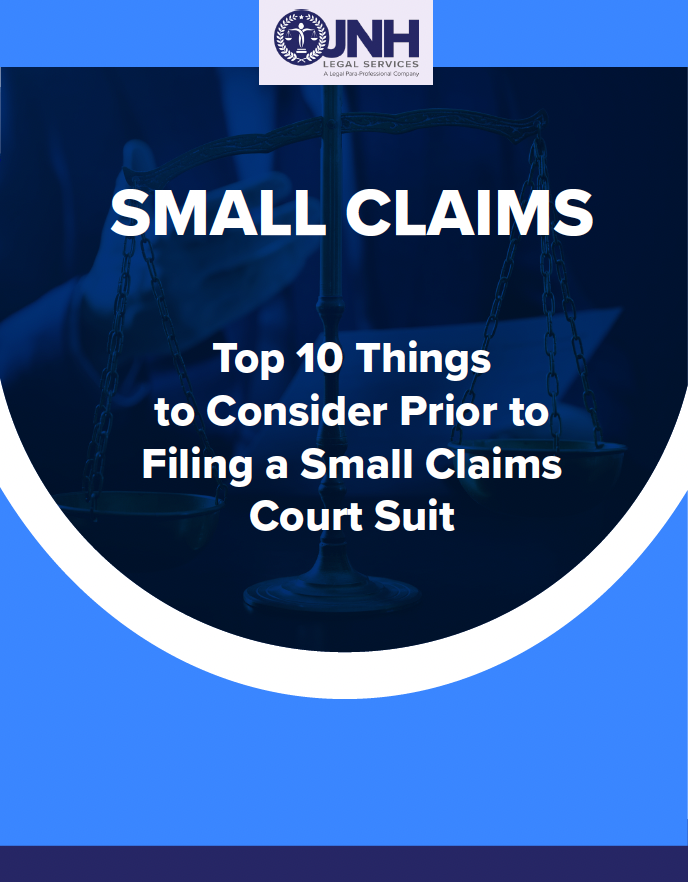
Download “TOP 10 THINGS TO CONSIDER PRIOR TO FILING A SMALL CLAIMS COURT SUIT”
Common Small Claims FAQs
While Arizona court rules generally prohibit legal professionals from speaking for you at the small claims hearing itself (unless all parties and the judge agree), I provide comprehensive support for every other step of the process. This includes evaluating the merits of your claim or defense, advising on legal strategy, preparing and filing the initial claim (Plaintiff’s Statement) or response (Defendant’s Statement), organizing evidence, drafting witness questions, and guiding you on courtroom procedures and etiquette to ensure you are fully prepared to present your own case effectively.
The Arizona Small Claims Court handles civil cases where the amount in dispute is $3,500 or less. Common appropriate matters include breach of oral or written contracts, unpaid loans or invoices, property damage claims (e.g., from a minor car accident or tenant damage), landlord-tenant security deposit disputes, consumer complaints for faulty services or goods, and minor personal injury claims that fall under the monetary limit.
To file a claim, you must complete a Plaintiff’s Statement and file it with the correct justice court, paying a filing fee. The court will then issue a summons to be served on the defendant. A defendant who wishes to contest a claim must file a written Defendant’s Statement with the court within 20 calendar days of being served. Missing this deadline can result in a default judgment. After the response is filed, the court will schedule a hearing, typically within a few months.
Strong evidence is crucial. This includes contracts, invoices, receipts, canceled checks, photographs, repair estimates, emails, text messages, and a timeline of events. My service involves helping you identify the most persuasive evidence, ensuring it is legally admissible, and organizing it into a clear, logical presentation for the judge. I can also assist in preparing simple exhibits and drafting questions for you to ask any witnesses.
Winning a judgment in court is different from collecting the money. If the other party does not voluntarily pay, you must take further legal steps to enforce the judgment. I can guide you through post-judgment collection procedures, which may include filing forms for a wage garnishment, placing a lien on the debtor’s property, or requesting a bank account levy through the court. These processes require additional paperwork and understanding of legal procedures.
The value lies in preparation and avoidance of fatal errors. The small claims process is governed by specific rules and deadlines. An error in filing, improper service of paperwork, or a poorly organized case can lead to dismissal or an unfavorable ruling before you even speak. My role is to ensure all procedural steps are handled correctly, your legal arguments are sound, and you walk into the hearing feeling confident, organized, and fully prepared to advocate for yourself successfully.
Related Articles
-
The Role of Legal Paraprofessionals in Small Claims Cases
A legal paraprofessional can be extremely helpful in Arizona small claims court. These courts are designed to be more accessible to the public, but they can still be very confusing. There are strict deadlines you must meet. Misunderstanding the technical requirements could tank your claim, even if it is completely valid. Having an affordable legal…
-
Where to File a Small Claims Case in Tucson
If you’re in Tucson and want to file a small claims case, you will file your case in the correct Pima County Justice Court precinct. There is no single place to file, and the right precinct depends on where the defendant lives, does business, or where the dispute occurred. Often, it depends where the best…
-
Is Small Claims Court the Right Way to Resolve Your Dispute? Arizona Alternatives Explained
If you have a financial dispute with someone, you might wonder if small claims court is a good fit for you. Many Arizonans can use small claims court to resolve disagreements in a quick and affordable way. It also lets you hire a legal paraprofessional to help with your case rather than a more costly…